
How Surrogacy Works:
The Process, Step By Step
Surrogacy is an arrangement in which a surrogate carries and delivers a baby for intended parents. In gestational surrogacy, the embryo is created through IVF with the intended parents' or donors' eggs and sperm, so the surrogate has no genetic link to the baby. The journey runs from consultation and matching through legal clearance, embryo transfer, pregnancy and birth.


Gestational Surrogacy And Traditional Surrogacy: What Is The Difference?
In traditional surrogacy, the surrogate uses her own egg, so she is genetically related to the child. That adds legal and emotional complexity, and it is much less common today. The Surrogacy Co. works exclusively with gestational surrogacy, where the surrogate carries an embryo created through IVF and has no genetic connection to the baby.
Our Surrogacy Process In Seven Steps
The process involves many moving parts, and we guide you through each one. Here is the order they happen in.
The process involves many moving parts, and we guide you through each one. Here is the order they happen in.
1. Initial Consultation

The process involves many moving parts, and we guide you through each one. Here is the order they happen in.
2. Agency Onboarding
We review profiles with you, arrange a meet and greet, and guide you to a Tentative Match Agreement with your surrogate. How matching works is explained below.
3. Matching
Your surrogate completes comprehensive health and psychological evaluations. Reproductive attorneys then draft and finalize your gestational surrogacy agreement.
4. Medical And Legal Clearance
We make sure the right insurance is in place and guide you in managing funds safely through an independent escrow account.
5. Funding And Insurance
We make sure the right insurance is in place and guide you in managing funds safely through an independent escrow account.
6. Embryo Transfer And Pregnancy
Your baby is welcomed into your arms, parentage orders are finalized, and your surrogate receives postpartum support while she recovers.
7. Birth And The Fourth Trimester
Legal Steps, Insurance And Escrow
-
You and your surrogate each have your own reproductive attorney. Your gestational surrogacy agreement is signed before any medical procedure begins, and parentage orders after the birth confirm you as the legal parents. A facilitation agreement also spells out what The Surrogacy Co. does for you.
-
Some health plans cover parts of surrogacy, but many intended parents purchase additional coverage for the surrogate's medical care. We help you put the right coverage in place, including newborn health insurance.
-
Surrogate compensation and related costs are paid from an independent escrow account funded by the intended parents, so everyone knows the funds are safe and the payments are on time.
How Long Does Surrogacy Take?
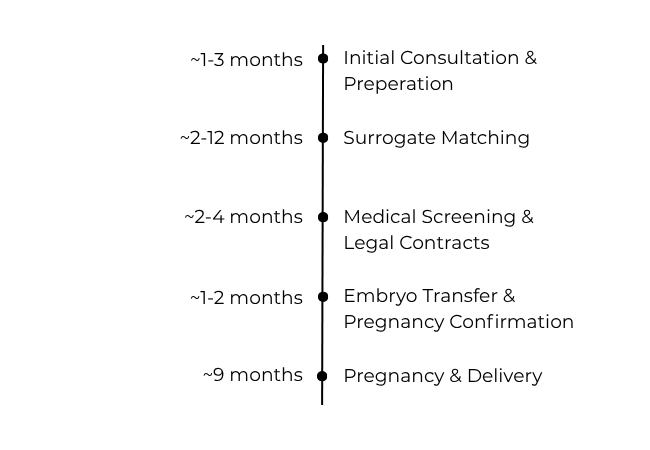
Surrogacy looks a little different for every family, so there is no single timeline. Most journeys take roughly 12 to 24 months from your first call to the birth of your baby, and a lot depends on factors no one can fully control.
Matching is the stage that is hardest to predict. It can take up to 12 months to find the right gestational carrier, and we will never rush it. Our biggest commitment is that everyone involved feels good about the match. Once you are matched, medical and legal clearance come first. Then getting pregnant, the pregnancy itself and the birth can take another 9 to 12 months.
Our founder, Jenna, has been through this twice as a surrogate and knows how much the waiting can weigh on families. We are with you at every stage.

What Will Surrogacy Cost Us?
Cost is a real part of this decision, and we believe in being open about it. You can find the agency fees, surrogate expenses and any add-ons that may come up on our cost page. Our fees reflect our commitment to you, your family, your baby and your gestational carrier. We want you to welcome your new family feeling confident and supported, knowing your gestational carrier is well cared for every step of the way.
By Jenna Clarke, MPH, two-time surrogate and founder. Last updated 11/13/2026.Surrogacy Process For
Intended Parents FAQs
-
Surrogates and their partners complete robust medical, psychological and background screenings so they are healthy and emotionally prepared. We follow ASRM guidelines. You review profiles and meet potential surrogates to find a match that fits your priorities.
-
Yes. Your first call can be by Zoom or in person, so you can start from anywhere in the U.S. or abroad. It covers the same ground as the first step above, and there is no need to travel to Lexington to begin. Book a discovery call here.
-
As involved as you and your surrogate are both comfortable with. You discuss this during matching, and it becomes part of your match agreement. Many intended parents attend medical appointments, are at the birth if the surrogate agrees, and stay in regular contact.
-
No. Legal contracts signed before the pregnancy give you full parental rights. The surrogate and her partner have no legal claim to the baby, and as a gestational carrier she has no genetic connection to the baby.
-
Independent surrogacy can cost less up front, but an agency brings screening, matching, coordination and an intermediary when things get complicated. Most families rely on a trusted agency. A boutique agency like ours adds care and one-to-one support on top of that coordination, so you are known by name and never treated as just a number. Here’s a resource to help with your selection process: How to Choose the Right Surrogacy Agency
-
If a match ends, we help you find a new one. Whether a rematch fee applies depends on why the match ended.
-
We follow best-practice guidelines for a smooth transition. Legal steps are taken to finalize your parental rights, your surrogate receives postpartum support while she recovers, and her family has the chance to meet the baby.